
News · 14 July 2026
Designed for the Fiftieth Visit
Why designing for the fiftieth visit may matter as much as designing for the first.
The attractions industry has become exceptionally good at creating memorable first rides.
That is hardly surprising. The first ride is the one that appears in reviews, social media posts and YouTube videos. It is the experience that shapes first impressions and often determines whether an attraction is considered a success or failure.
A great first ride matters. But for many parks, the economics of an attraction are built just as heavily on what happens afterwards.
Season passholders return again and again. Local guests ride their favourites dozens of times. Families revisit attractions that have become part of their tradition. In some cases, the guests who create the most long-term value for a visitor attraction are also the guests who know it best.
That raises an interesting question.
What is an attraction designed to offer someone on their fiftieth ride?
Why most attractions were built for consistency, not return
Most attractions were never really built to answer that question.
They were built to deliver a specific experience as consistently as possible. The same scenes, the same reveals, the same story beats and the same effects, repeating thousands of times each day.
There are good reasons for this. Consistency is valuable. Attractions need to be safe, reliable and predictable from an operational perspective. Fixed theme park experiences are easier to design, test and maintain.
The industry did not arrive here by accident.
Yet every repeat ride contains a contradiction.
The attraction remains exactly the same, but the guest does not.
They know where to look. They know when the reveal is coming. They know which effect made them laugh or jump last time. Their relationship with the experience has changed, even if the experience itself has not.
That is not necessarily a problem. Many classic attractions remain enjoyable after dozens of visits.
But it does suggest there may be an opportunity that the industry has largely overlooked.
The guest who knows the attraction best
For years, visitor attractions have typically been refreshed from the outside. New rides are added. New lands are built. Marketing campaigns create reasons to return.
Far less attention has been given to the idea that the attraction itself might continue evolving for returning guests.
Other forms of entertainment have moved in this direction naturally. Games reveal new layers over time. Sport generates endless variation from a fixed set of rules. Even the streaming platforms we use every day continuously adapt what they present to us.
Most attractions still operate as fixed experiences.
That distinction is becoming increasingly interesting because the technologies available to attraction designers are changing. Real-time show control systems, intelligent media pipelines and advanced tracking technology" are making it possible to think differently about how experiences are delivered. Not simply as a sequence of pre-programmed events, but as systems capable of responding to context.
The difference between randomisation and adaptive design
The important point is that this is not the same as randomisation.
Randomisation is relatively easy. A different effect. A different line of dialogue. A different sequence of events.
Adaptive theme park experiences are something else entirely.
The goal is not variety for its own sake. The goal is to make better creative decisions in the moment.
A scene may benefit from a different pace. A particular moment may deserve greater emphasis. A returning guest may gain more from seeing something new than from seeing exactly the same reveal for the tenth time.
Most of these changes would be invisible to the guest. In many cases they should be. The ambition is not to draw attention to the system. The ambition is to create immersive experiences that remain rewarding because they continue to reveal something new.
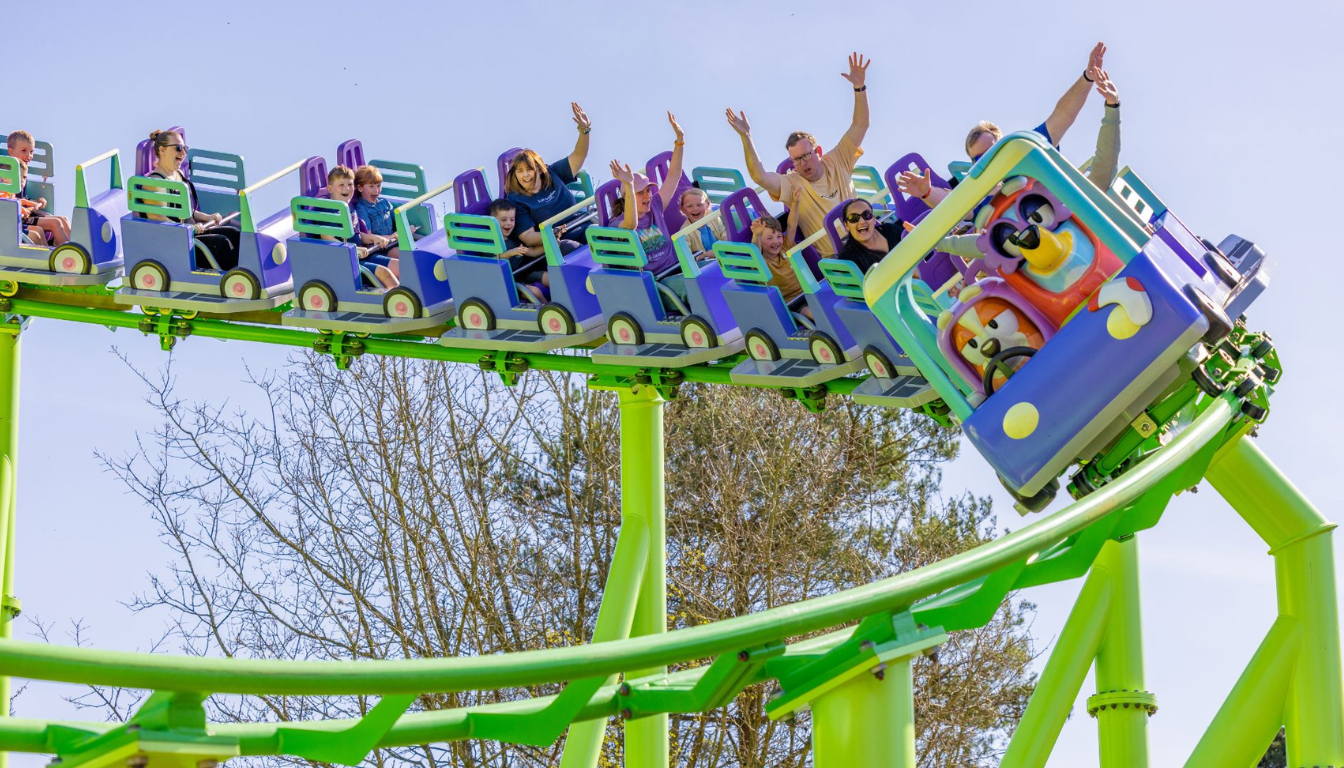
Bluey the Ride at Alton Towers is a useful example. The ride was designed from the outset so that returning guests would find something different each time, not through randomisation but through a structured variation engine that ensures the experience continues to reward familiarity. A guest on their twentieth ride is not hearing the same thing as a guest on their first. That distinction was a creative decision, not a technical one.
Re-rideability as a commercial consideration
Viewed through that lens, re-rideability becomes more than a creative consideration.
It becomes a commercial one.
An attraction designed for repeat visits has the potential to increase the value of a season pass, strengthen guest loyalty, generate richer word of mouth and extend the perceived lifespan of the experience itself.
For an industry built around repeat visitation, those outcomes are difficult to ignore.
At XOrdinary, this question sits at the centre of much of our current work. We believe the industry is moving from fixed experiences towards adaptive ones, and that designing for the fiftieth visit may become just as important as designing for the first.
The first ride will always matter.
The more interesting question is what happens next.